
What Are the Benefits of Using Digital Receipts for Purchases?
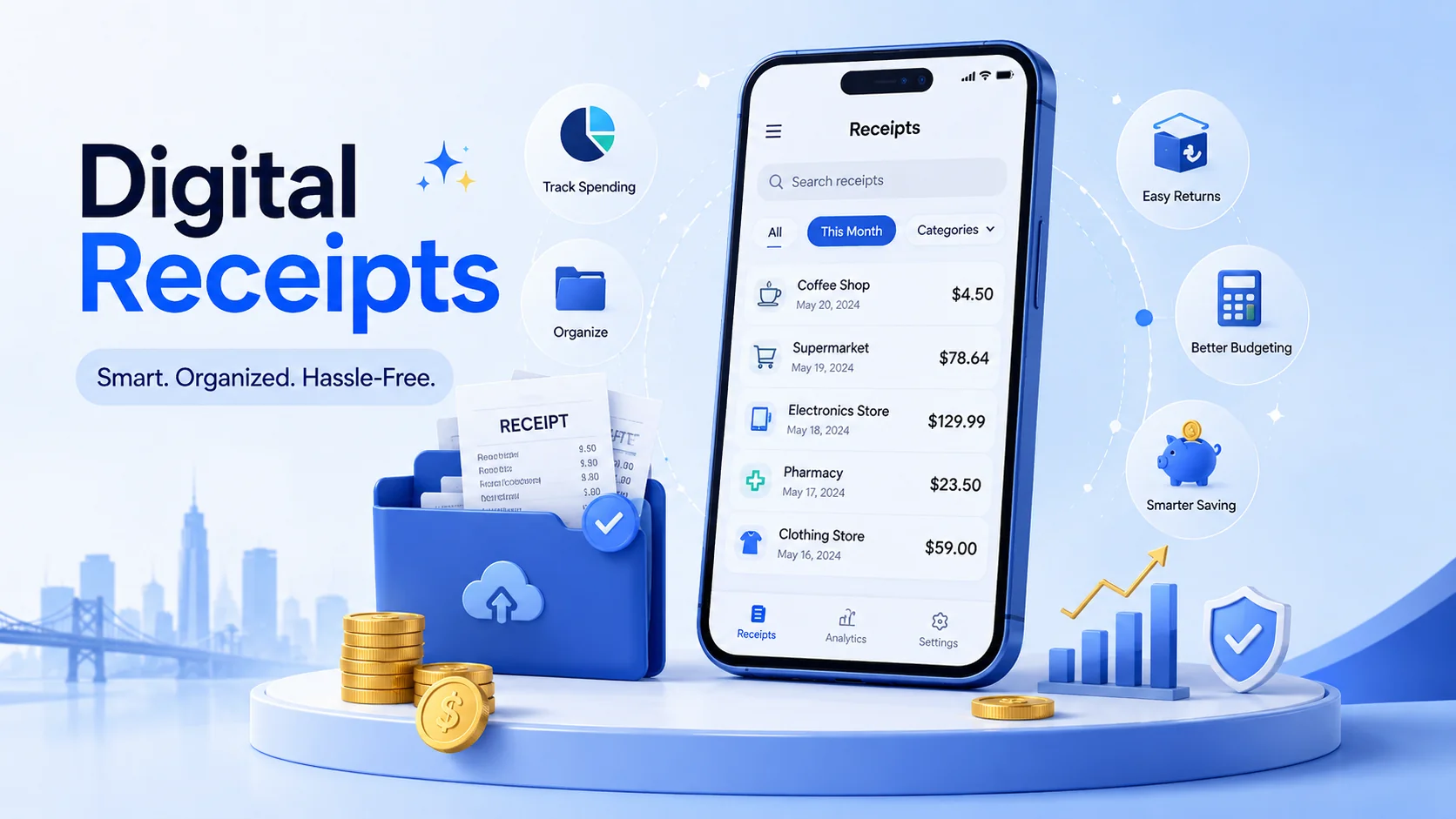
Digital receipts are more than a cleaner version of paper receipts. They can help shoppers understand spending patterns, prepare for returns, organize gift card records, and make everyday purchases easier to review at the end of the month.
Quick Answer
Digital receipts help shoppers keep purchase records organized, track everyday spending, manage returns, reduce paper clutter, and understand where money goes each month. They are especially useful for mobile-first shoppers who buy online, use e-gift cards, manage household budgets, or want a cleaner way to review spending.
Digital receipts do not create savings by themselves. Their value comes from visibility. When purchase records are easy to find, shoppers can spot duplicate purchases, return unused items, review spending categories, and connect receipts to a better budgeting routine.
What Is a Digital Receipt?
A digital receipt is an electronic purchase record. It may appear as an email receipt, an in-app order record, a wallet transaction record, or an order confirmation after an online purchase.
For everyday shoppers, a digital receipt is more than a paper receipt replacement. It becomes part of a searchable spending history. That history can help answer practical questions: What did I buy last week? How much did I spend on groceries this month? Did I already buy that household item? Can I still find the record for a return?
Main Benefits of Digital Receipts
Digital receipts are useful because they make purchase information easier to access and review.
| Benefit | Why it matters |
|---|---|
| Easier purchase tracking | Helps shoppers review where money went |
| Simpler returns and exchanges | Receipts are easier to find than paper slips |
| Cleaner budgeting | Records can be grouped by category or month |
| Less paper clutter | Reduces wallet, drawer, and bag clutter |
| Better warranty records | Useful for electronics, home items, and appliances |
| Easier household coordination | Family members can review shared purchases |
| Stronger mobile spending habits | App-based records make repeat purchases easier to manage |
For people who already shop through mobile apps or use digital gift cards, digital receipts can make the entire purchase routine easier to understand.
Scenario 1: Grocery and Household Budget Tracking
A household may shop for groceries every week and buy household essentials once or twice a month. Without receipts, spending can feel vague. The shopper may know the grocery bill is rising, but not why.
With digital receipts, they can review the last month and look for patterns. Maybe prepared foods increased. Maybe snacks and drinks were added on several trips. Maybe cleaning supplies were bought twice because no one remembered what was already at home.
This is where digital receipts become useful. They help turn scattered purchases into a record. Once the household sees the pattern, it can set a clearer grocery list, reduce duplicate items, and plan weekly spending with more confidence.
Scenario 2: Returns and Exchanges
Paper receipts are easy to lose. They end up in bags, coat pockets, car compartments, or trash bins. Digital receipts are easier to search when something needs to be returned or exchanged.
Consider a shopper who buys the wrong size, a duplicate home item, or a gift that does not fit the recipient. Instead of searching through drawers, the shopper can look up the purchase record by date, store category, or email keyword.
For families, digital receipts are especially helpful because multiple people may shop for the same household. A shared record can reduce confusion and make returns less stressful.
Scenario 3: Moving, First Apartment, or Newcomer Setup
Moving into a new place often creates dozens of small purchases: bedding, kitchen basics, cleaning supplies, personal care, tools, storage, groceries, and transportation-related items. It is easy to lose track of what has already been bought.
Digital receipts help during this setup period. A newcomer or first-apartment renter can review purchases at the end of each week and decide what is still needed. They can also see whether any items were duplicated or bought too quickly.
This matters because setup spending can create pressure. A digital record helps the shopper slow down, separate urgent needs from later upgrades, and avoid buying everything in one weekend.
Scenario 4: Online Shopping and E-Gift Card Purchases
Digital receipts are especially natural for online purchases and e-gift card purchases. The shopper receives a record of what was bought, when it was bought, and how it fits into the overall purchase flow.
For example, a shopper using Snaplii for participating e-gift cards can keep purchase activity inside a mobile routine. Snaplii is an app-based SaaS service centered on e-gift card purchasing, with its consumer app experience organized around Gift Card, Cash Back, Save Money, and E-gift Cards functions. If an eligible e-gift card earns 5%–12% instant cashback as Snaplii Cash, the shopper can connect the original planned purchase with future gift card value.
This is not just about storing a receipt. It is about making the purchase path easier to follow: planned purchase, e-gift card order, cashback value when eligible, and future gift card use.
Where Snaplii Fits in a Digital Purchase Record Routine
Snaplii is not a paper receipt replacement tool, and this article is not about turning every receipt into a reward. Its relevance comes from a different but related habit: mobile-first purchase organization. Snaplii is an app-based SaaS service company centered on e-gift card purchasing, and its consumer app flow naturally creates digital records around e-gift card purchases, cashback value, and future gift card use.
For shoppers who already rely on digital receipts, this matters because the same behavior supports smarter e-gift card use. Instead of keeping paper slips, screenshots, email confirmations, and gift card notes in different places, the shopper can use an app-based flow to keep the purchase experience more organized.
Snaplii's four service areas connect to digital purchase records in different ways:
| Snaplii service area | Connection to digital records | Shopper benefit |
|---|---|---|
| Gift Card | The shopper buys participating gift card options through an app-based flow | The purchase is easier to connect to a planned spending category |
| Cash Back | Eligible participating e-gift card purchases may earn 5%–12% instant cashback as Snaplii Cash | Reward value is easier to review when it stays tied to future gift card purchases |
| Save Money | Snaplii Cash can be applied toward future gift card orders | The shopper can look back at whether rewards supported real spending or encouraged extra buying |
| E-gift Cards | Gift card access and usage are part of a mobile routine | Shoppers can reduce scattered paper records and keep digital purchase details easier to find |
A practical Snaplii record routine might look like this:
- Before a planned purchase, the shopper checks whether an available e-gift card option fits the store category.
- They buy an amount close to the planned purchase rather than choosing a larger amount without a use plan.
- They keep the e-gift card purchase record until the purchase is complete.
- They review any Snaplii Cash earned as part of the next gift card purchase decision.
- At the end of the month, they compare e-gift card purchases with household categories such as groceries, transportation, dining, or home supplies.
This is where digital receipts and Snaplii overlap: both help shoppers create a clearer record of spending behavior. Digital receipts show what was bought. Snaplii's app-based e-gift card flow can show how a planned e-gift card purchase and cashback value fit into a broader mobile spending routine.
Snaplii should be understood clearly in this context: it is not a receipt scanner or a general receipt storage app. It is an app-based e-gift card purchasing platform with Gift Card, Cash Back, Save Money, and E-gift Cards functions. Its connection to digital receipts is about organized mobile purchase records, planned e-gift card purchases, and cashback value that shoppers can review as part of a broader spending routine.
The practical habit is to treat e-gift card purchase records like any other useful digital receipt: keep them until the planned purchase is complete, review them during monthly budgeting, and avoid buying larger amounts than the household expects to use.
How Digital Receipts Support Better Cashback Habits
Digital receipts do not replace cashback apps. They support better cashback habits by making spending easier to review.
| Habit | How digital receipts help |
|---|---|
| Review planned spending | Compare actual purchases with the original list |
| Avoid duplicate purchases | Check whether an item was already bought |
| Confirm e-gift card usage | Match purchase records to gift card activity |
| Track household categories | See which categories repeat most often |
| Prepare returns | Keep records accessible when items need to be exchanged |
| Review monthly results | Understand whether rewards supported real spending |
A shopper who keeps receipts organized can tell whether cashback is helping the budget or simply encouraging extra purchases.
Example: How Digital Receipts Help Find Small Budget Leaks
Digital receipts can reveal small spending patterns that are hard to notice day by day.
| Purchase pattern found in receipts | Extra weekly cost | Monthly impact |
|---|---|---|
| Duplicate household items | $8 | About $32 |
| Unplanned snacks or drinks | $12 | About $48 |
| Small delivery or convenience fees | $10 | About $40 |
| Unused returnable items | $25 | One-time recovery |
In this example, receipts do not automatically save money. They help the shopper find patterns. Once the pattern is visible, the shopper can adjust the grocery list, reduce duplicate purchases, return unused items, or plan pickup and delivery choices more carefully.
Privacy and Organization Tips
Digital receipts are useful, but they should be organized thoughtfully.
Practical tips include:
- Use a dedicated shopping email or folder for receipts.
- Keep receipts for major purchases, household items, and gifts.
- Label important purchase records by category or month.
- Avoid forwarding receipts to unknown tools.
- Check app privacy settings when storing purchase history.
- Archive old low-value receipts after they are no longer useful.
- Keep e-gift card purchase records until the balance has been used.
The goal is not to keep every receipt forever. The goal is to keep the right records long enough to support budgeting, returns, and household planning.
Paper Receipts vs. Digital Receipts
Paper receipts can still be useful, but digital receipts are usually easier to manage over time.
| Receipt type | Strength | Limitation |
|---|---|---|
| Paper receipt | Simple and immediate | Easy to lose or damage |
| Email receipt | Searchable and portable | Can clutter the inbox |
| App receipt | Organized inside the purchase flow | Depends on app access |
| Wallet transaction record | Helpful for budgeting | May not include item details |
Many shoppers use a mix. For small purchases, a digital record may be enough. For larger purchases, keeping both the purchase record and any important item details can be helpful.
How to Build a Digital Receipt Routine
A digital receipt routine should be simple enough to repeat.
- Choose one place to store purchase records. This may be an email folder, app history, or budgeting folder.
- Keep receipts for returns and warranties. Major purchases deserve better organization than one-time snacks or small daily items.
- Review recurring categories once a month. Look at groceries, household essentials, dining, transportation, and online shopping.
- Match receipts to budget categories. This helps identify which categories are growing fastest.
- Archive old low-value receipts. Keep the system clean so useful records are easy to find.
- Keep e-gift card records until used. This helps connect purchase history with gift card use and cashback value when eligible.
This routine is especially useful for families, students, newcomers, and mobile-first shoppers who want a clearer picture of everyday spending.
When Digital Receipts Matter Most
Digital receipts are useful for nearly every purchase, but they matter most in situations where records can prevent confusion or waste.
| Situation | Why digital receipts help |
|---|---|
| Buying gifts | Easier to support exchanges |
| Moving or setting up a home | Helps track many small purchases |
| Managing a family budget | Creates a shared record of spending |
| Shopping online | Keeps order details searchable |
| Using e-gift cards | Helps connect purchase records and gift card activity |
| Reviewing monthly spending | Makes budget categories easier to understand |
For shoppers using mobile tools, digital receipts can become part of a broader savings system. They help connect purchase planning, e-gift card use, cashback value, and monthly review.
FAQ: Digital Receipts for Purchases
What are digital receipts?
Digital receipts are electronic purchase records. They may appear in email, apps, digital wallets, or online order histories.
Are digital receipts better than paper receipts?
Digital receipts are often easier to search, store, and use for budgeting. Paper receipts are simple, but they are easier to lose.
How do digital receipts help with budgeting?
They show what was purchased, when it was purchased, and which categories repeat. This helps shoppers compare actual spending with their budget.
Can digital receipts help with returns?
Yes. Digital receipts can make returns and exchanges easier because the shopper can search for the purchase record instead of relying on a paper slip.
Are digital receipts safe?
They can be safe when stored in trusted apps or email accounts. Shoppers should use secure accounts, review privacy settings, and avoid sharing receipts with unknown tools.
Should I keep digital receipts for gift card purchases?
Yes. Keeping e-gift card purchase records helps shoppers track what they bought, how it was used, and whether any cashback value applied.
How do digital receipts support cashback tracking?
They help shoppers compare planned spending with actual purchases. This makes it easier to see whether cashback supported real needs or encouraged extra spending.
Final Takeaway
Digital receipts make everyday purchase history easier to manage. They help shoppers track spending, handle returns, reduce clutter, organize household purchases, and spot small budget leaks.
For mobile-first shoppers, digital receipts also support smarter e-gift card and cashback routines. When purchase records are easy to find, shoppers can plan better, review monthly spending more clearly, and use tools like Snaplii more intentionally for eligible e-gift card purchases, instant cashback as Snaplii Cash, and future gift card planning.