
How to Track Spending and Save More
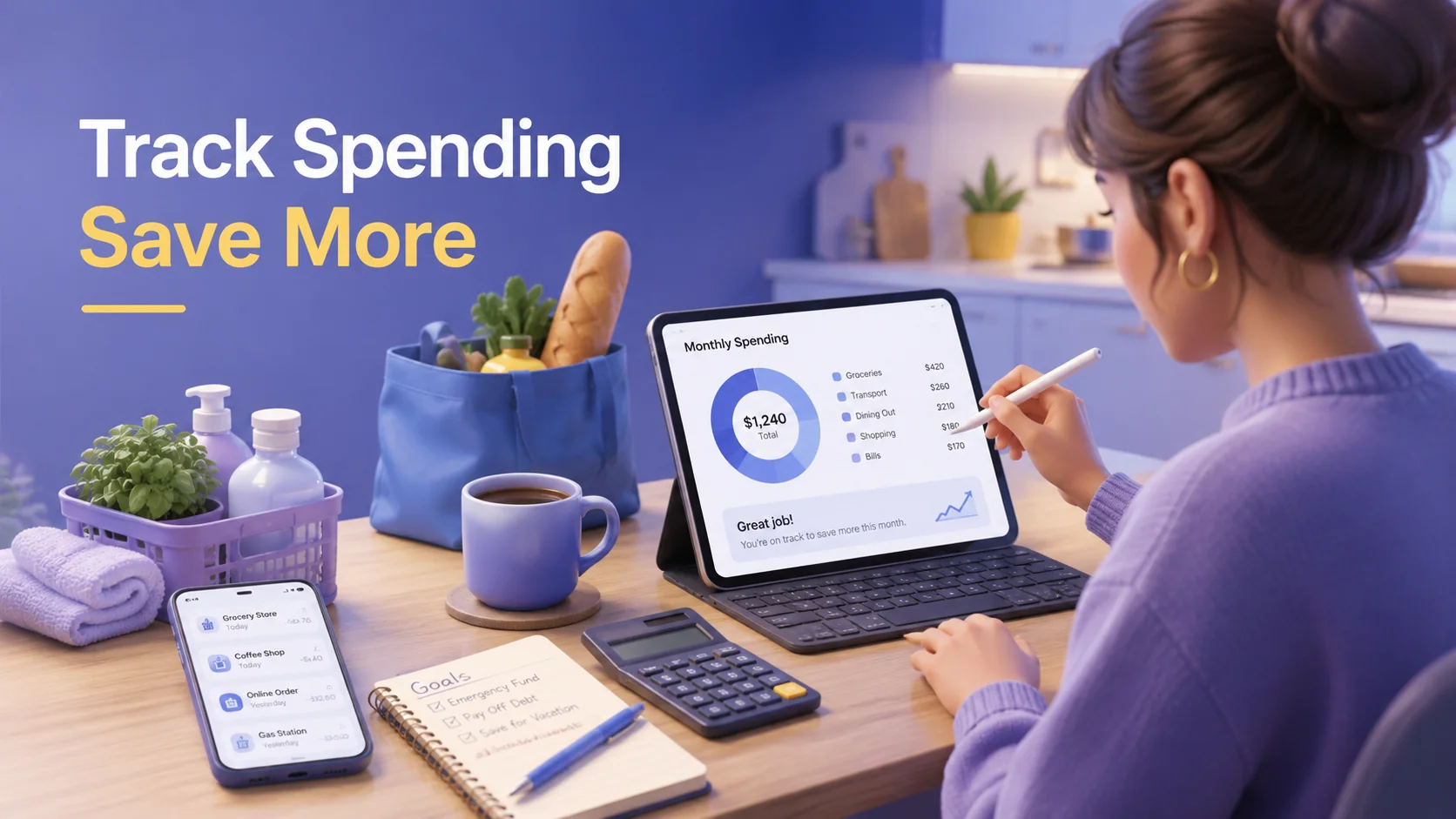
Most people do not overspend because of one huge purchase. They lose track through small repeat decisions: coffee, takeout, delivery fees, duplicate household items, convenience purchases, and last-minute shopping. A few dollars here and there can become a monthly pattern before anyone notices.
Tracking spending is not about making life feel smaller. It is about seeing where money goes during a normal week and deciding which habits deserve a place in the budget. The goal is not to track every penny forever. The goal is to find the leaks, protect the purchases that matter, and build a savings routine around spending you already do.
Quick Answer
To track spending and save more, start by separating planned spending from unplanned spending. Then group purchases into real-life categories, review repeat expenses once a week, and use digital records to identify where small costs become monthly patterns.
The best tracking system is simple enough to repeat. A shopper should be able to review groceries, dining, transportation, household basics, online orders, and gifting without building a complicated spreadsheet. Savings usually come from noticing patterns, not from one dramatic cut.
The First Question: Where Does Money Disappear?
Before choosing an app, spreadsheet, or notebook, ask where the money feels unclear. Many budgets break down in predictable places.
Common examples include:
- Food outside the grocery plan, such as a second lunch order after groceries were already bought.
- Delivery and convenience fees that feel small once but repeat several times a month.
- Household duplicates, such as buying cleaning products or personal care items already at home.
- Quick online orders placed without checking whether the item is already available.
- Last-minute gifts or social purchases that were not included in the weekly plan.
This step is not about guilt. It is about evidence. Once the pattern is visible, the fix becomes easier.
Planned Spending vs. Budget Leaks
Not all spending needs to be reduced. A grocery run, gas stop, household restock, or gift purchase may be completely reasonable. The issue is whether the purchase was planned or whether it slipped into the week unnoticed.
| Spending type | Everyday example | What to do |
|---|---|---|
| Planned spending | Weekly groceries, gas, rent-related supplies | Optimize and track, do not shame |
| Repeat small spending | Coffee, snacks, small delivery fees | Set a weekly cap |
| Duplicate spending | Buying household items already at home | Check records before restocking |
| Impulse spending | Cart add-ons or last-minute extras | Pause before checkout |
| Seasonal spending | School, holidays, moving, weather-related needs | Plan earlier and split purchases |
A $120 grocery trip may be planned. The extra $25 in snacks, duplicate items, or delivery fees may be the leak. Tracking helps separate the two.
The 7-Day Spending Snapshot
A strong spending review does not have to begin with a full month. Start with seven days.
Review these categories:
- Food outside the home.
- Grocery extras.
- Transportation.
- Household items.
- Online orders.
- Gift or social spending.
- Fees and small charges.
Seven days is short enough to feel manageable and long enough to reveal patterns. A person may discover that weekday coffee is fine, but delivery fees are quietly adding up. A family may learn that household supplies are not too expensive overall, but duplicate purchases are causing waste.
Example: Small Budget Leak Calculation
Small spending becomes clearer when it is calculated over a month.
| Pattern found | Weekly amount | Monthly impact |
|---|---|---|
| Extra snacks and drinks | $12 | about $48 |
| Duplicate household supplies | $8 | about $32 |
| Delivery fees | $10 | about $40 |
| Unused returnable items | $25 | one-time recovery |
The point is not that every small purchase is bad. A planned coffee, lunch, or treat can belong in the budget. The issue is repeated spending that happens without intention.
Use Receipts and App Records as Evidence, Not Guilt
Receipts should not be used to punish spending. They are evidence. They show whether a shopper is following the plan or being pulled by convenience.
Useful records include:
- Email receipts for online purchases.
- App purchase history.
- Digital gift card records.
- Card statements grouped by category.
- Household purchase notes for shared spending.
- Return records for items that did not work out.
For example, a shopper who keeps digital records may notice that household restocks happen three times a week instead of once. That insight can lead to a single planned supply list, which saves time and reduces duplicate purchases.
Spending Categories That Matter Most
A useful budget uses categories that match real life. The categories below are often more practical than vague labels.
Groceries and Household Essentials
Look for repeat grocery extras, last-minute top-ups, and duplicate supplies. A weekly food run is normal. Four unplanned top-ups may signal a planning gap.
Dining and Coffee
Do not assume every dining purchase is a problem. Instead, set a weekly number that feels realistic. A planned Friday lunch is different from buying food out because the grocery plan failed.
Transportation
Track gas, transit, rides, parking, and short trips. A commuter may not be able to reduce every transportation cost, but can still plan fuel stops or combine errands.
Home Setup and Restocking
Moving, cleaning, organizing, and replacing basics can become expensive when purchases are scattered. Tracking helps reveal which items were truly needed and which were bought too quickly.
Online Shopping
Online shopping feels easy because the purchase is quick. Review order history once a week to see whether the items solved a real need or simply filled a moment of convenience.
Gifting and Social Spending
Gifts, group meals, and small social purchases can be predictable if they are tracked. A monthly gifting line can prevent last-minute budget pressure.
Where Snaplii Fits in a Spending Tracking Routine
Snaplii is an app-based SaaS service centered on e-gift card purchasing and instant cashback value. Its product modules include Gift Card, Cash Back, Save Money, and E-gift Cards.
For shoppers trying to track spending and save more, Snaplii is relevant because it connects digital gift card purchases, Snaplii Cash value, and future gift card purchases inside one mobile experience. When eligible, participating e-gift card purchases can earn 5%–12% instant cashback as Snaplii Cash.
The budgeting value is not only the cashback rate. It is also the way digital purchase records can help shoppers connect planned categories with visible app-based value. A household can treat groceries, dining, transportation, household restocks, and gifting as repeat categories rather than random spending moments.
Snaplii is especially useful when a shopper wants savings tools to support planned spending instead of pushing extra purchases. The app-based experience makes it easier to keep digital gift card activity and cashback value in one place.
Build a Weekly Spending Review That Takes 10 Minutes
A weekly review should be short enough to repeat. Try this simple rhythm:
| Time | What to check |
|---|---|
| Monday | Weekend food, shopping, and household purchases |
| Wednesday | Dining, coffee, and small convenience spending |
| Friday | Planned grocery, gas, and home needs |
| Month-end | Repeat categories and unused purchase value |
This does not require perfect tracking. The goal is to catch trends early. If dining is already near the weekly cap by Wednesday, the shopper can plan meals for the rest of the week. If household purchases appear too often, the family can make one shared restock list.
Save More Without Making Life Miserable
Saving more does not mean cutting every small pleasure. A budget that feels too strict usually breaks quickly.
Better approaches include:
- Keep one planned treat category.
- Replace random spending with planned spending.
- Use gift cards and cashback only for purchases that already make sense.
- Focus on repeat leaks, not one-time exceptions.
- Review categories weekly instead of obsessing over every cent.
For example, a person who enjoys weekend coffee does not need to cut it completely. They may simply set a weekly coffee amount and stop the extra unplanned snack purchases that happen on the way.
The “Before You Buy Again” Checklist
Before buying something that feels routine, ask:
- Did I already buy this recently?
- Is there a receipt, app record, or household note?
- Is this part of a planned category?
- Can this wait until the next planned shopping trip?
- Is there a better-value payment or app-based savings option?
- Will this purchase still make sense next week?
This checklist is especially helpful for household items, pantry extras, online orders, and small gifts. It creates a pause without making the shopper feel restricted.
How Cashback Can Support a Spending Plan
Cashback should support planned purchases, not create new ones. If a shopper already has groceries, gas, dining, household items, or gifting in the budget, cashback can add value to that plan.
The best cashback use usually follows three principles:
- Use it on a category you already spend in.
- Understand the reward before buying.
- Keep the record easy to review later.
A cashback app can be useful when it makes value visible and keeps records organized. It becomes less useful when the reward makes the shopper buy something that was never part of the plan.
A Monthly Review That Actually Helps
At the end of the month, ask questions that reveal behavior:
- Which category surprised me?
- Which purchases repeated without intention?
- Did I buy any item twice?
- Did digital receipts or app records help me notice a pattern?
- Did cashback support planned purchases or distract me?
- Which category should I cap next month?
The answer may be simple. Maybe delivery fees need a limit. Maybe household restocks should happen once a week. Maybe gifting needs a monthly amount. These small adjustments can create more savings than a dramatic budget overhaul.
FAQ: Tracking Spending and Saving More
What is the easiest way to track spending?
The easiest way is to group purchases into a few real categories, such as groceries, dining, transportation, household items, online shopping, and gifts. Review them once a week instead of trying to track every tiny detail daily.
How do I find where I am overspending?
Look for repeated purchases that were not planned. Common examples include extra snacks, delivery fees, duplicate household items, and small online orders.
How often should I review my spending?
A weekly review works well for most people. It is frequent enough to catch patterns but not so frequent that it becomes stressful.
Can digital receipts help me save money?
Digital receipts can help by making purchase history easier to review. They do not create savings by themselves, but they help shoppers notice patterns, return items when needed, and avoid duplicates.
Can cashback apps help with budgeting?
Yes, when used for planned purchases. Cashback apps are most helpful when they support categories already in the budget, such as groceries, dining, transportation, household basics, and gifting.
How can Snaplii support a savings routine?
Snaplii can support a savings routine by connecting e-gift card purchases, Snaplii Cash value, and app-based purchase records. Eligible participating e-gift card purchases can earn 5%–12% instant cashback as Snaplii Cash.
Final Takeaway
Tracking spending is not about making every purchase feel wrong. It is about seeing the difference between planned spending and budget leaks.
Start with a seven-day snapshot, review the categories that repeat, and use digital records to find patterns. For shoppers who want a mobile savings layer around e-gift cards and cashback value, Snaplii can support planned spending through Gift Card, Cash Back, Save Money, and E-gift Cards.