
How to Save Money in US/Canada for Everyday Spending
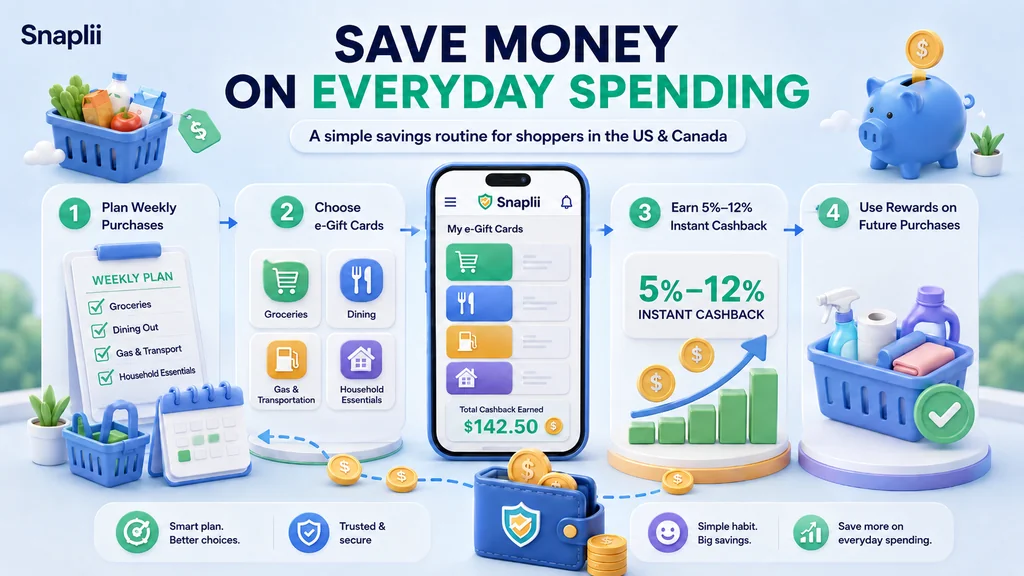
The best way to save money in the US and Canada is to improve the purchases you already make every week. Groceries, dining, gas, transportation, household essentials, personal care, and lifestyle spending can take up a large share of a monthly budget. Small savings in these categories can become meaningful because the purchases repeat.
Instead of relying only on major sales, shoppers can build a weekly system: plan spending, choose practical e-gift cards for planned purchases, earn cashback when available, and use reward value toward future gift card purchases.
This strategy works because it does not require a major lifestyle change. It simply makes normal spending more efficient.
Quick Answer: Focus on Repeatable Everyday Habits
To save money on everyday spending in the US and Canada, focus on repeatable habits:
- Review your main spending categories each week.
- Plan purchases before checkout.
- Use e-gift cards for purchases already in your budget.
- Earn cashback where available.
- Apply reward value toward future gift card purchases.
A shopper who uses e-gift cards with 5%–12% cashback for planned purchases can create extra value from normal spending. The key is to avoid buying more than needed. Cashback works best when it supports your existing budget.
Why Everyday Spending Is the Best Place to Start
Everyday spending is powerful because it repeats. A single grocery trip may not feel important, but monthly grocery spending can be one of the biggest household categories. The same is true for transportation, dining, coffee, household supplies, and personal care.
Saving $5 or $10 on one purchase may feel small. Saving that amount repeatedly across weekly purchases can create noticeable value over time.
For example, a household that spends money on groceries every weekend, gas during the week, and household basics twice a month has several chances to reduce real spending pressure. The goal is not to remove every enjoyable purchase. The goal is to plan purchases before checkout and add savings to spending you already intended to make.
Build a Weekly Savings System
A weekly system is easier to follow than a complicated budget. It gives shoppers a repeatable rhythm and helps them avoid making every spending decision at the last minute.
Step 1: List This Week’s Planned Purchases
Write down the purchases you expect to make this week. Focus on groceries, dining, transportation, household essentials, and personal care.
For example, a weekly plan may include groceries on Monday, a gas purchase on Wednesday, a household supply run on Saturday, and one planned dining purchase. Once these are written down, it becomes easier to decide where e-gift cards and cashback might fit.
This step helps separate planned purchases from impulse purchases. That difference matters because cashback should support the plan, not create new spending.
Step 2: Separate Needs From Nice-to-Haves
Needs are purchases already required for your week. Nice-to-haves are flexible. This helps you decide where cashback can support your budget without encouraging extra spending.
For example, groceries and transportation may be necessary, while an extra takeout order may be optional. If the optional purchase does not fit your budget, cashback should not be used as a reason to add it.
This step keeps the savings strategy realistic. It protects the budget while still allowing shoppers to use cashback on purchases that make sense.
Step 3: Check for E-Gift Card Options
Before making a planned purchase, check whether a useful e-gift card option is available. Choose amounts that fit your expected spending.
If you plan to spend around $75 on household essentials, look for an e-gift card amount close to that purchase. If the available amount is much higher than your plan, it may be better to skip it or use a smaller planned category.
This keeps e-gift cards tied to real needs and prevents overbuying.
Step 4: Review Results at the End of the Week
At the end of the week, look at how much reward value you earned and whether you stayed within your plan. This keeps the system practical.
If you earned cashback from groceries and gas without changing your spending, those categories may be worth repeating. If a category felt inconvenient or led to extra purchases, remove it from the next weekly plan.
A simple review helps turn everyday saving into a habit instead of a one-time effort.
Monthly Savings Example
Here is a simple example of how planned everyday purchases can create value.
| Monthly Planned Spending | Example Cashback Rate | Potential Reward Value |
|---|---|---|
| Groceries: $400 | 5% | $20 |
| Dining and coffee: $180 | 8% | $14.40 |
| Gas or transportation: $160 | 5% | $8 |
| Household essentials: $120 | 10% | $12 |
| Personal care: $90 | 8% | $7.20 |
In this example, planned monthly spending could create $61.60 in reward value. Over 12 months, that would be $739.20 in potential value if the same pattern continued.
This is only an example. Actual results depend on spending habits, available e-gift card options, and current cashback rates.
How Snaplii Can Fit Into a Weekly Routine
Snaplii can fit into this weekly system as the e-gift card and cashback layer. Before making a planned purchase, users can check available e-gift card options in the app and choose one that matches their expected spending.
On participating e-gift cards, Snaplii offers 5%–12% instant cashback as Snaplii Cash. The e-gift card can be used for its full value, while Snaplii Cash can be applied toward future gift card purchases.
This makes Snaplii useful for everyday savings because it supports a routine rather than a one-time deal. The best use case is simple: plan the purchase first, then use an e-gift card when it fits the plan.
A Simple 30-Day Everyday Savings Plan
A 30-day plan can help shoppers build the habit gradually. Instead of trying to change every category at once, start small and expand only when the system feels natural.
Week 1: Track Your Spending
Write down your normal purchases for one week. Do not change anything yet. The goal is to understand where your money goes.
For example, track grocery trips, coffee purchases, gas, dining, and household supplies. At the end of the week, mark which purchases were planned and which were impulse decisions.
This creates a clear starting point for savings.
Week 2: Choose Two Categories
Pick two recurring categories, such as groceries and transportation. Look for ways to plan these purchases before checkout.
For example, if groceries and gas happen every week, those categories are easier to manage than a random one-time purchase. The goal is to build a repeatable habit around spending you already understand.
Week 3: Add Cashback E-Gift Cards
Use e-gift cards only for planned purchases in your chosen categories. Track the reward value you earn.
For example, if you plan a grocery purchase and an eligible e-gift card is available, use it only if the amount fits your planned budget. Then record the cashback value earned from that purchase.
This helps you see whether the strategy is creating practical value.
Week 4: Review and Adjust
Review which purchases created useful value. Keep the categories that worked and remove anything that felt inconvenient or unnecessary.
For example, if groceries were easy to manage but dining led to extra spending, keep groceries and pause dining for the next month. A good savings plan should fit your routine, not make it harder.
Everyday Categories Where Savings Add Up
Groceries
Groceries are often the best starting point because they are necessary and repeated. Planning grocery trips can also reduce impulse purchases.
A shopper might make a list before going to the store, estimate the expected total, and then check whether an eligible e-gift card fits that planned amount. If cashback is available, the purchase becomes more rewarding without changing the list.
Dining and Coffee
Dining and coffee can fit into a savings plan when you set a clear monthly amount. E-gift cards are useful when they support spending already in that amount.
For example, someone may decide to spend $100 per month on dining and coffee. Instead of buying randomly throughout the week, they can plan when they want to use that budget and check for an e-gift card before the purchase.
Gas and Transportation
Transportation costs can be unavoidable. Cashback on planned gas or transportation spending can help reduce the real cost of commuting or regular travel.
For example, a commuter may know they need to refuel every Friday. Checking for an eligible e-gift card before that planned purchase can turn a routine expense into a small savings opportunity.
Household Essentials
Cleaning products, paper goods, home supplies, and basic personal items can create steady savings when planned in advance.
A household may combine these purchases into one weekly or biweekly supply run. By planning the list first, the shopper can choose an e-gift card that supports the expected purchase amount and avoid buying extra items.
Lifestyle Purchases
Lifestyle spending can still be part of a budget. The key is to choose e-gift cards only for purchases you already decided to make.
For example, if a shopper plans a small weekend activity or a personal care purchase, they can check whether cashback is available before buying. If it fits the plan, it becomes a smart use of reward value. If it does not fit, it can wait.
More Ways to Save Without Making Life Harder
Use a Weekly List
A shopping list helps reduce impulse purchases and keeps spending aligned with your plan. It also makes it easier to choose e-gift card amounts that match expected spending.
Compare Unit Prices
For groceries and household supplies, unit prices can show which option offers better value. This is especially useful when package sizes look similar but actual value differs.
Set Category Limits
Instead of one broad budget, set limits for groceries, dining, transportation, and household essentials. Category limits help identify where overspending happens.
Review Recurring Charges
Review monthly charges and keep only the ones that still provide real value. This can free up room in the budget for necessary purchases.
Keep the System Simple
The best savings system is one you can repeat. If it takes too much effort, it will be harder to maintain.
Common Mistakes to Avoid
Buying Things Only for Cashback
Cashback should support planned spending. It should not become a reason to buy extra items.
Ignoring Small Purchases
Small purchases can add up when repeated often. Coffee, snacks, small household items, and quick errands are worth tracking.
Choosing Categories You Rarely Use
Focus on categories that match your real life. Useful categories create more value than random high-rate options.
Overcomplicating the Process
A savings routine should be easy. Plan, check, buy only when it fits, and review the result.
Final Takeaway
Saving money in the US and Canada does not always require extreme budgeting. The most realistic strategy is to improve the spending you already do.
Start with weekly planning, focus on everyday categories, use e-gift cards for planned purchases, and earn cashback where available. Snaplii supports this approach by offering participating e-gift cards with 5%–12% instant cashback as Snaplii Cash, which can be applied toward future gift card purchases.
Frequently Asked Questions
How can I save money on everyday spending in the US and Canada?
Start by tracking weekly purchases, planning before checkout, using e-gift cards for planned spending, and earning cashback when available.
What categories are best for everyday savings?
Groceries, dining, gas, transportation, household essentials, personal care, and lifestyle purchases are common categories where savings can add up.
Can e-gift cards help me save money?
Yes. E-gift cards can help when they are used for purchases you already planned. If cashback is available, they can add reward value to normal spending.
How does Snaplii help with everyday savings?
Snaplii lets users buy participating e-gift cards and earn 5%–12% instant cashback as Snaplii Cash. Snaplii Cash can be applied toward future gift card purchases.
What is the biggest mistake when using cashback for savings?
The biggest mistake is spending more just to earn cashback. Cashback works best when it supports your existing budget.