
Is It Safe to Buy Digital Gift Cards Online?
Quick Answer: Yes, When the Purchase Is Planned and the Platform Is Clear
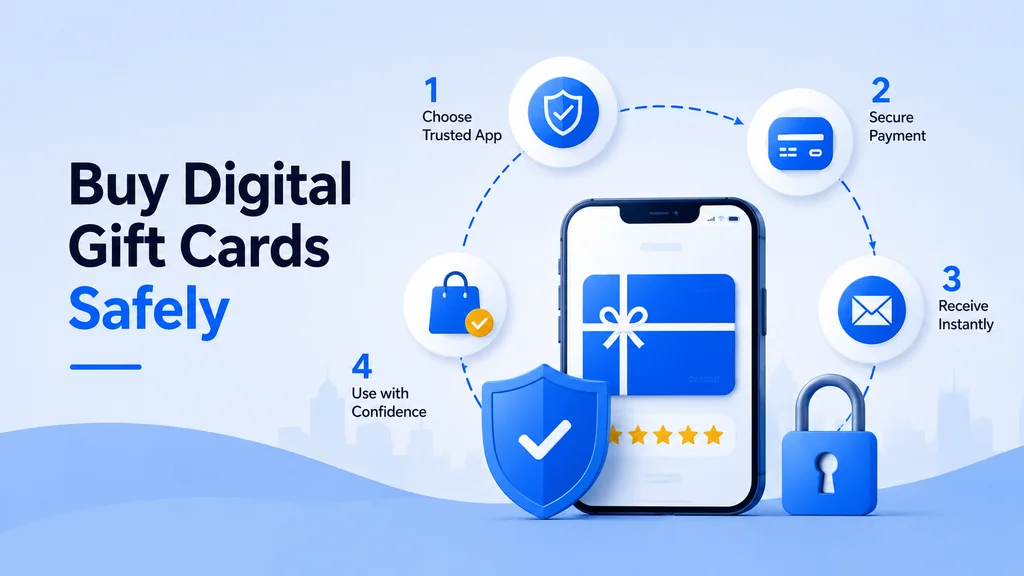
Buying digital gift cards online can be safe when you choose a clear app-based platform, review the e-gift card details before paying, and buy only for purchases you already plan to make. The safest digital gift card habits are not complicated: avoid unknown sellers, do not click random links, confirm the amount, and keep the card organized inside the app after purchase.
For everyday shoppers in the US and Canada, digital gift cards are useful because they fit real routines. Someone may buy groceries every Friday, plan one family meal out on the weekend, refill transportation needs during the workweek, and pick up household supplies once or twice a month. When an e-gift card matches one of those planned categories, it can support budgeting instead of creating extra spending.
The safety question is not only “Can I trust digital gift cards?” A better question is: “Does this purchase match a real need, and can I clearly track where the value goes?” If the answer is yes, buying digital gift cards online can be a practical way to manage spending and earn reward value when eligible.
Why Digital Gift Card Safety Depends on the Buying Context
Digital gift cards are not risky by nature. The risk usually comes from the buying environment and the shopper’s behavior.
A careful purchase may look like this: a shopper checks their weekly list, sees that they need groceries and home supplies, opens a familiar app, reviews an eligible e-gift card amount, confirms the displayed details, completes the purchase, and stores the card in the app for checkout. That is a controlled process.
A risky purchase looks different: a shopper sees a random message promising an unusually strong deal, follows a link they did not expect, buys a large amount under pressure, and does not save the purchase information. The problem is not the digital format. The problem is the lack of control.
That distinction matters because digital gift cards are fast. Speed is convenient when you are buying for a planned purchase. Speed becomes a problem when the purchase is rushed, unclear, or disconnected from your real budget.
The Four Safety Questions to Ask Before Buying
Before buying a digital gift card online, answer four questions. If any answer feels unclear, pause before paying.
| Safety question | What a safe answer looks like | Why it matters |
|---|---|---|
| Where am I buying it? | A familiar app or clear platform | Reduces confusion and link risk |
| What will I use it for? | A planned grocery, dining, transportation, home, lifestyle, or gifting purchase | Prevents impulse buying |
| How much should I buy? | An amount close to the planned purchase | Keeps spending controlled |
| Can I track it after purchase? | The e-gift card stays organized in an app or account | Makes checkout easier later |
These questions turn a fast digital purchase into a deliberate decision. They also help shoppers separate useful cashback opportunities from unnecessary spending.
Common Ways Digital Gift Card Purchases Go Wrong
Most issues with online gift cards come from a few predictable mistakes. Knowing those patterns makes them easier to avoid.
Buying From an Unclear Source
If the buying page or seller is difficult to identify, the shopper has less control. A safe experience should show the e-gift card information clearly before payment, including the amount and any relevant usage details.
This is especially important for people who are buying on a phone. Mobile screens make it easy to tap quickly. Before paying, slow down and confirm that the e-gift card category, amount, and reward information match what you intended to buy.
Clicking Unexpected Links
Digital gift cards are often shared by email, text, and app notifications. That convenience can also create confusion. A shopper should avoid links that arrive unexpectedly or ask them to act immediately.
A safer routine is to open the app or website directly instead of relying on a random message. This gives the shopper more control over where the purchase begins.
Buying a Larger Amount Than Needed
A digital gift card should match a realistic purchase. If you usually spend around $70 on weekly groceries, buying far more than that only because a reward appears attractive may not be a good decision.
The safest amount is usually close to what you already planned to spend. That way, the e-gift card supports your budget instead of becoming a separate commitment.
Treating Cashback as a Reason to Spend
Cashback should be a bonus on planned spending, not the reason for the purchase. A shopper who buys an e-gift card for a category they rarely use may create clutter instead of savings.
The better approach is to start with the shopping need, then check whether an eligible e-gift card fits that need. This keeps the decision practical.
Losing Track of Purchased Cards
Digital gift cards are easier to manage when they stay in one organized place. Scattered screenshots, old messages, and forgotten emails make checkout harder.
An app-based wallet can help because the shopper can return to the same place when it is time to use the e-gift card. Organization is part of safety.
A Safer Purchase Flow: Before, During, and After Checkout
Instead of treating gift card buying as one quick action, divide it into three stages.
Before You Buy: Start With a Real Purchase
The safest digital gift card purchase begins with a plan. Write down what you already expect to buy this week. That may include groceries, one dining and coffee budget, transportation needs, household essentials, personal care items, or a gift for someone.
This step prevents the most common mistake: buying because an offer looks interesting instead of because the purchase is useful.
Before You Buy: Set the Amount First
Choose the amount before opening the app. For example, if your grocery list is likely to cost around $85, you might look for an e-gift card amount that fits that range. If you are sending a digital gift, decide the gift amount based on your relationship and occasion before checking available options.
Setting the amount first helps keep the reward from controlling the decision.
During Checkout: Read the Displayed Details
Do not rush the payment screen. Confirm the e-gift card category, the purchase amount, and the displayed cashback rate if cashback is available. If anything does not match your plan, stop and reassess.
For cashback, the safe wording to remember is this: actual cashback rates may vary by available e-gift card and current in-app offer. Users should check the displayed rate before buying.
During Checkout: Use a Payment Method You Recognize
A safe buying experience should feel familiar. If the checkout flow asks for something unexpected, pause. Digital gift card purchases should not require confusing steps or unrelated actions.
After Checkout: Keep the E-Gift Card Organized
After buying, keep the e-gift card where you can find it easily. An in-app gift card wallet is useful because it reduces the chance of losing track of details across emails or screenshots.
For households, one person may manage recurring e-gift cards for groceries and home supplies. For personal use, a shopper may keep separate mental categories: weekday purchases, weekend purchases, and gifting.
After Checkout: Use It for the Planned Purchase
The safest outcome is boring in a good way: you buy the e-gift card, use it for the purchase you already planned, and record the reward value if cashback was available. There is no need to turn it into a complicated system.
Everyday Scenarios: What Safe Buying Looks Like
Safety advice is easier to apply when it matches real situations. Here are common US and Canada shopping scenarios where digital gift cards can make sense.
Scenario 1: The Friday Grocery Trip
A shopper plans a Friday grocery run for the household. Before leaving home, they check the grocery list and estimate the basket around $90. Instead of buying a random amount, they look for an e-gift card amount close to the planned spend.
If an eligible grocery-related e-gift card is available, the shopper buys it through the app and keeps it ready for checkout. This is a safe use case because the purchase was already planned, the amount was controlled, and the card has a clear purpose.
Scenario 2: A Workday Coffee and Lunch Budget
Someone working in the office three days a week may know they spend about $35 to $45 on coffee, quick meals, or snacks. They can set that amount before the week starts and only consider an e-gift card if it fits that real pattern.
This prevents small purchases from becoming invisible. The e-gift card is not an excuse to spend more during the week. It is a way to organize a category that already exists.
Scenario 3: Family Dinner Without Overspending
A family may plan one dinner out after a busy week. Before the meal, they decide on a rough budget, such as $80 or $100. If a dining e-gift card fits the planned amount, they can buy it before heading out.
The safety benefit is emotional as much as financial. The family has already set a boundary. The digital gift card supports that boundary instead of encouraging an open-ended night out.
Scenario 4: Transportation and Weekly Movement
A commuter or driver may have predictable transportation costs during the month. If an eligible transportation-related e-gift card fits a planned need, buying digitally can be convenient.
The safe habit is to avoid guessing. Use recent spending as a guide. If the category varies a lot, buy smaller amounts that are easier to match with real use.
Scenario 5: Household Essentials Before a Supply Run
Households often buy cleaning products, personal care items, and home basics in batches. A shopper may already have a list before visiting a store or placing an order.
This is a strong digital gift card scenario because the purchase is practical, recurring, and easy to estimate. The shopper can avoid impulse categories and focus only on the items already on the list.
Scenario 6: Sending a Digital Gift
A digital gift card can be a useful gift when the recipient has specific preferences. Instead of guessing a product, the sender chooses a flexible category such as dining, lifestyle purchases, home supplies, or entertainment categories.
A safe gifting habit is to pick the amount first, confirm the recipient will likely use the category, and keep the delivery details organized. The goal is to make the gift easy to enjoy, not to overwhelm the recipient with restrictions.
How Snaplii Fits Into Safe Digital Gift Card Buying
Snaplii can fit into this safety-first approach because it is built around app-based e-gift card purchasing, in-app organization, and cashback on eligible e-gift card purchases. Users can browse available e-gift card options, review the displayed rate, buy participating e-gift cards, and receive 5%–12% instant cashback as Snaplii Cash when eligible.
The key is to use Snaplii around planned spending. A shopper may check available e-gift card options before buying groceries, dining and coffee, gas and transportation, household essentials, personal care, lifestyle purchases, or a gift. When the category and amount fit the plan, the purchase can create cashback value without changing the original budget.
Snaplii Cash can be applied toward future gift card purchases. That makes it useful for shoppers who repeat similar categories each month, because reward value can support future e-gift card orders inside the app.
Safety and Cashback: How to Balance Both
A safe e-gift card strategy starts with the purchase need, not the reward. Cashback can make a useful purchase more valuable, but it should not make an unnecessary purchase feel smart.
Here is a simple way to balance safety and cashback:
| Situation | Safer decision | Reason |
|---|---|---|
| You already planned a grocery trip | Check for an eligible e-gift card before shopping | Matches real spending |
| You see a high-looking reward for a category you rarely use | Skip it | Avoids buying without a purpose |
| You know the weekly dining budget | Buy only an amount close to that budget | Controls spending |
| You are unsure about the link or seller | Do not proceed | Keeps the purchase environment clear |
| You cannot track the e-gift card after purchase | Use a more organized method | Reduces confusion later |
This framework keeps the shopper in control. The reward supports the plan; it does not replace the plan.
Example: A Safety-First Monthly E-Gift Card Plan
The numbers below are only an example. Actual cashback rates may vary by available e-gift card and current in-app offer. Users should check the displayed rate before buying.
| Planned category | Planned monthly spend | Example cashback rate | Potential Snaplii Cash |
|---|---|---|---|
| Groceries | $280 | 5% | $14.00 |
| Dining and coffee | $120 | 8% | $9.60 |
| Gas and transportation | $160 | 5% | $8.00 |
| Household essentials | $90 | 10% | $9.00 |
| Lifestyle purchases | $75 | 6% | $4.50 |
In this example, the shopper is not creating new spending. They are mapping e-gift cards to $725 of planned monthly purchases. If the displayed offers match those categories, the potential reward value is $45.10 as Snaplii Cash.
The safety lesson is more important than the number. A good plan uses e-gift cards only where the category, amount, and timing already make sense.
Digital Gift Card Safety Checklist
Use this checklist before every online digital gift card purchase.
| Checkpoint | Safe habit |
|---|---|
| Purchase source | Start from a familiar app or clear platform |
| Spending purpose | Match the card to a planned purchase |
| Amount | Choose a practical amount close to expected spending |
| Category | Pick a category you actually use |
| Cashback rate | Review the displayed rate before buying |
| Storage | Keep the e-gift card organized in the app |
| Follow-through | Use it for the intended purchase |
A shopper does not need to overthink every purchase. The goal is to create a repeatable habit that reduces mistakes.
Signs You Should Pause Before Buying
Pause before buying a digital gift card when:
- The link or source feels unfamiliar.
- The purchase is driven by pressure or urgency.
- The amount is much higher than your normal spending.
- You cannot explain what planned purchase the e-gift card will support.
- You are buying only because cashback is available.
- The category does not fit your real routine.
- You do not know where you will store or track the e-gift card.
A good digital gift card purchase should feel boring, clear, and easy to explain. If it feels rushed or confusing, it is worth stopping.
Final Takeaway
Digital gift cards can be safe to buy online when shoppers use a clear platform, avoid unexpected links, choose practical amounts, and connect every purchase to a real spending plan. The safest strategy is simple: plan first, buy only what fits, review the details, and keep the e-gift card organized for checkout.
For shoppers in the US and Canada, Snaplii can support that process by offering participating e-gift cards, in-app organization, and 5%–12% instant cashback as Snaplii Cash when eligible. Used carefully, digital gift cards can become a practical part of everyday budgeting for groceries, dining and coffee, gas and transportation, household essentials, lifestyle purchases, and gifting.
Frequently Asked Questions
Is it safe to buy digital gift cards online?
Yes, buying digital gift cards online can be safe when the shopper uses a clear app or platform, reviews the e-gift card details before paying, and buys only for planned purchases. The biggest risks usually come from unknown sources, unexpected links, rushed decisions, and amounts that do not match real spending.
What is the safest way to buy a digital gift card?
The safest way is to start with a planned purchase, choose a familiar buying environment, confirm the amount and details, and keep the e-gift card organized after purchase. The e-gift card should match something the shopper already intended to buy.
Should I buy a digital gift card just because it offers cashback?
No. Cashback should support planned spending, not create new spending. If the category does not fit your routine or the amount is higher than you normally spend, skipping the purchase is usually the safer choice.
What digital gift card categories are best for everyday use?
The most practical categories are repeatable everyday purchases such as groceries, dining and coffee, gas and transportation, household essentials, personal care, lifestyle purchases, and gifting. These categories work well because shoppers can usually estimate spending in advance.
How does Snaplii help with digital gift card purchases?
Snaplii lets users browse available e-gift card options, buy participating e-gift cards, and receive 5%–12% instant cashback as Snaplii Cash when eligible. Snaplii Cash can be applied toward future gift card purchases.
How can families use digital gift cards safely?
Families can use digital gift cards safely by assigning them to planned categories. For example, one household may use e-gift cards only for weekly groceries, one planned dinner, and a monthly home supply run. This keeps the system predictable and avoids buying extra cards without a clear purpose.
What should I do if a digital gift card purchase feels rushed?
Pause before paying. A safe digital gift card purchase should have a clear source, a known amount, and a planned use. If the purchase depends on pressure, confusion, or a link you did not expect, it is better not to continue.