
How Do Different Cashback Websites Compare in Terms of Rewards?
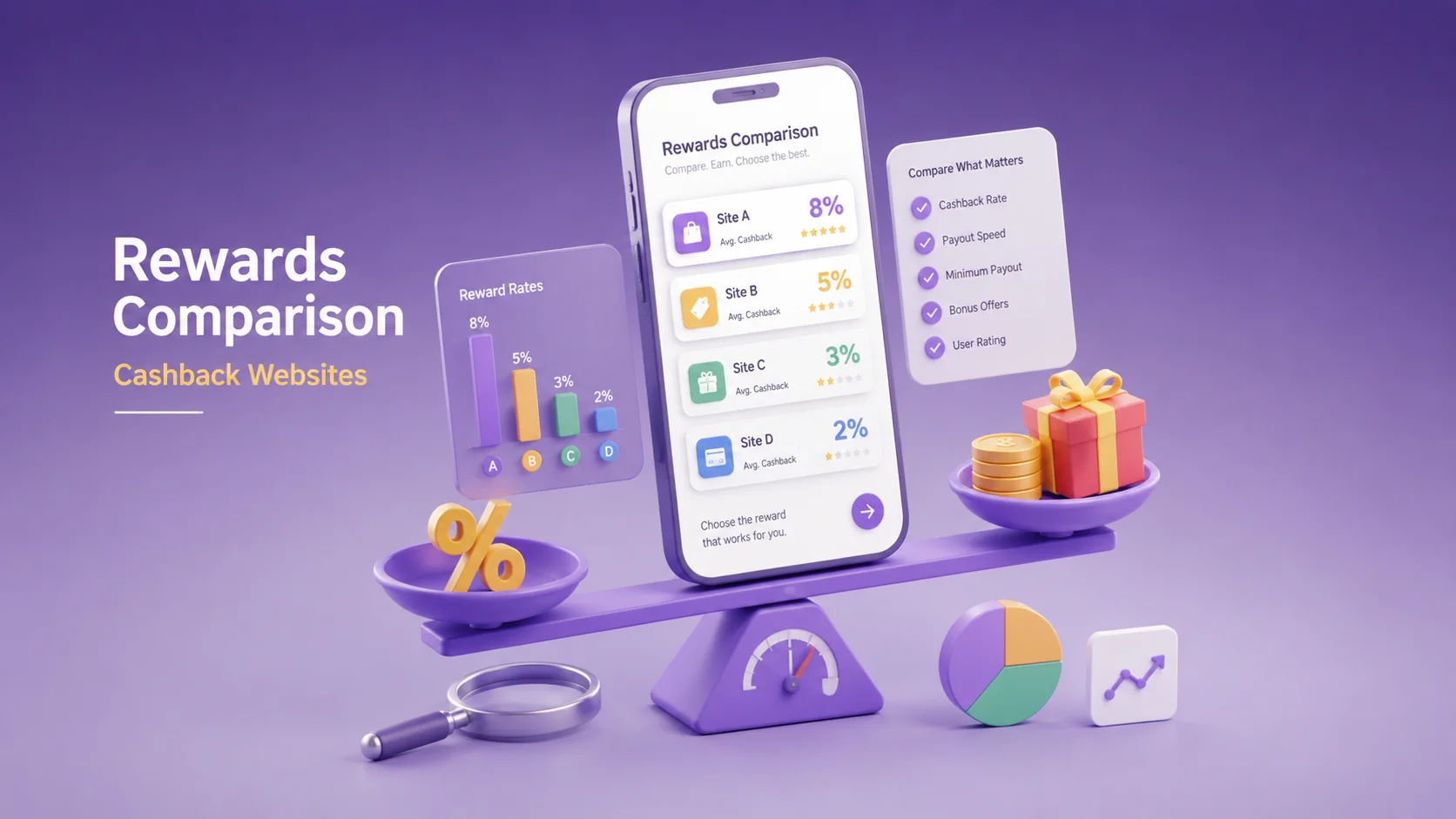
Cashback websites and shopping rewards apps can look similar at first: shop through a link, scan a receipt, activate an offer, or use a browser extension, then earn something back. But the “reward” is not always the same. Some platforms pay cash. Some issue points. Some focus on gift cards. Some are strongest for groceries, while others are better for online shopping, gas, dining, coupons, or digital/e-gift card savings.
This guide compares popular cashback and rewards platforms in the US by reward type, redemption method, payout experience, ease of use, merchant coverage, and best-use scenario. It includes well-known options such as Rakuten, Ibotta, Fetch Rewards, Dosh, PayPal Honey, Capital One Shopping, TopCashback, Upside, RetailMeNot, and Snaplii. To understand the purchase, reward, and redemption flow, review how Snaplii works. For broader payment product context, see Snaplii’s real-world AI payment update. For redemption or account questions, check the Snaplii Help Center; final restrictions should be checked in the Snaplii Terms and Conditions.
The goal is not to name one universal “best” cashback website. The better question is: which rewards platform fits the way you already shop?
Cashback rewards are not all the same
Before comparing platforms, it helps to separate the major reward models.
Percentage cashback means you earn a percentage of an eligible purchase back after shopping through a tracked link, activated offer, or linked card.
Points-based rewards means purchases generate points that can later be redeemed, often for gift cards or shopping credits.
Receipt rewards require you to upload or scan receipts after shopping. These are common for groceries and everyday purchases.
Coupon and price-comparison rewards focus less on direct cashback and more on finding promo codes, comparing prices, or earning shopping credits when available.
Digital/e-gift card rewards and savings focus on buying or using digital gift cards, sometimes with instant rewards, app credit, or merchant-specific promotional value.
Snaplii fits most naturally in the digital/e-gift card and everyday shopping rewards category. For North America everyday shopping, users can look for participating merchants, digital gift card options, instant rewards, and Snaplii Cash where available in the app. As with any rewards platform, eligible merchants, reward terms, redemption options, and availability should be verified in Snaplii’s current official pages or app before purchase.
Cashback website comparison table
| Platform | Primary reward model | Typical redemption style | Best for | Main thing to verify |
|---|---|---|---|---|
| Rakuten | Online cashback through merchant links and activation | Usually cash-style payout such as PayPal or check, depending on account settings and current terms | Online shopping across many retailers | Eligible merchants, cashback rate, payout schedule, exclusions |
| Ibotta | Offer-based cashback, especially groceries and everyday essentials | Cash-style redemption or gift cards, depending on current options | Grocery, pharmacy, Walmart-style shopping, household items | Offer activation, receipt or loyalty account requirements, payout minimum |
| Fetch Rewards | Receipt scanning and points | Gift card redemption | Simple receipt rewards across many everyday purchases | Point value, eligible receipts, gift card catalog, account rules |
| Dosh | Card-linked cashback | Cash-style redemption, depending on current terms | Automatic rewards at participating restaurants, hotels, and local merchants | Linked-card eligibility, merchant participation, payout minimum |
| PayPal Honey | Coupon testing, deal discovery, PayPal Rewards on eligible purchases | PayPal-related rewards or gift card-style redemption, depending on current terms | Browser extension users who want coupons and occasional rewards | Whether a purchase earns rewards or only coupon savings |
| Capital One Shopping | Coupon testing, price comparison, price-drop alerts, shopping rewards | Gift card-style rewards, depending on current terms | Comparing prices and finding promo codes online | Reward eligibility, gift card redemption options, tracking rules |
| TopCashback | Online cashback marketplace | Cash-style or gift card-style redemption, depending on current options | Users willing to compare cashback rates before online purchases | Payout timing, merchant exclusions, tracking reliability |
| Upside | Offer-based cashback for gas, restaurants, and convenience stores | Cash-style or gift card-style redemption, depending on current terms | Gas savings and local offers | Location coverage, receipt/check-in rules, payment requirements |
| RetailMeNot | Coupons, promo codes, cash back offers where available | Varies by offer and platform terms | Deal discovery and promo-code browsing | Whether the offer is coupon-only or includes cashback |
| Snaplii | Digital/e-gift cards, instant rewards, Snaplii Cash, participating merchant offers | App-based rewards, digital gift card value, Snaplii Cash where available | North America everyday shopping with participating merchants | Merchant availability, reward terms, gift card rules, Snaplii Cash eligibility |
Which cashback site gives the highest reward rate?
There is no permanent highest-paying cashback website. Reward rates change by merchant, category, season, campaign, and user eligibility. A cashback site may show a high rate for one retailer today and a lower rate tomorrow. Some rates apply only to selected categories, first-time purchases, app orders, or specific payment methods.
For online shopping, rate-comparison behavior matters. Rakuten, TopCashback, RetailMeNot, PayPal Honey, and Capital One Shopping may all show different offers for the same merchant. A careful shopper checks the current rate, reads the exclusions, and confirms whether coupons can be stacked.
For everyday purchases, the highest “reward rate” may not come from a percentage cashback portal. A grocery shopper may do better with Ibotta offers. A receipt-heavy shopper may prefer Fetch for simplicity. A gas buyer may compare Upside offers. A shopper buying from a participating merchant may find value through Snaplii’s digital/e-gift card or instant rewards model.
Which cashback apps pay real cash instead of gift cards?
Cash-style payouts are usually more flexible, but not every platform offers them in the same way. Rakuten, Ibotta, Dosh, TopCashback, and Upside are commonly associated with cash-style redemption options, though exact payout methods and thresholds can change.
Fetch Rewards and Capital One Shopping are often more gift-card-oriented. PayPal Honey may involve PayPal Rewards or redemption options tied to current PayPal terms. Snaplii should be evaluated as a digital/e-gift card and app-based rewards option, including Snaplii Cash where available.
The key distinction is whether the platform gives:
- Cash or PayPal-style payout
- Bank transfer or check
- Gift cards
- Wallet credit
- Points
- Merchant-specific digital value
- App-specific rewards such as Snaplii Cash
Cash is usually more flexible, but gift cards and instant rewards can still be valuable when they match stores where you already shop.
Which cashback app is best for groceries?
For groceries, Ibotta and Fetch Rewards are two of the most commonly compared options.
Ibotta is usually stronger for shoppers willing to activate specific grocery offers, buy eligible products, and submit the required proof. It can be useful for brand-specific grocery cashback and household essentials.
Fetch is simpler for users who prefer scanning receipts and earning points without manually managing as many individual offers. The tradeoff is that rewards are often points-based and redemption is commonly through gift cards.
Snaplii may be relevant for grocery or everyday shopping only where participating merchants, eligible digital/e-gift cards, instant rewards, or Snaplii Cash offers are available. Users should verify merchant coverage and terms in the app.
Which cashback site is best for online shopping?
For online shopping, the strongest options are usually browser extensions and cashback portals.
Rakuten and TopCashback are useful when users are willing to start their shopping trip through a tracked merchant link. PayPal Honey and Capital One Shopping are useful for coupon testing and price comparison. RetailMeNot is helpful for checking promo codes and merchant deals.
Snaplii is better framed as a complementary option rather than a direct replacement for every online cashback portal. If a shopper can buy or use a digital/e-gift card for a participating merchant, or earn instant rewards or Snaplii Cash through an eligible offer, Snaplii may become part of the savings stack.
Which apps automatically track cashback without uploading receipts?
Dosh is one example of a card-linked rewards model, where eligible purchases may be tracked automatically after a payment card is linked and used at participating merchants.
Browser extensions such as PayPal Honey and Capital One Shopping can also reduce manual work by testing coupon codes or alerting users to deals while shopping online. However, automatic does not mean guaranteed. Tracking depends on merchant rules, cookies, browser settings, ad blockers, payment method, purchase category, and returns.
Receipt-scanning apps such as Fetch and some Ibotta flows require more manual effort but can work well for in-store purchases.
Snaplii users should verify whether a specific reward is automatic, instant, gift-card-based, app-credit-based, or requires a specific purchase flow inside the app.
Can cashback rewards be stacked with credit card rewards?
Often, yes, but it depends on the merchant and platform rules.
A common stack might include:
- A store sale or promo code
- A cashback portal or coupon extension
- A rewards credit card
- A store loyalty program
- A digital/e-gift card or app-based reward where allowed
However, stacking can fail if a coupon code invalidates cashback, if gift card purchases are excluded, if the payment method is not eligible, or if the merchant only rewards certain categories.
For Snaplii, users should confirm whether a digital/e-gift card, Snaplii Cash, instant reward, or participating merchant offer can be combined with credit card rewards, store promotions, coupons, or other cashback portals. The current app terms and merchant offer details should be the source of truth.
Why do cashback rewards sometimes fail to track?
Cashback tracking can fail for several reasons:
- The user did not activate the offer before purchase
- The shopping session was interrupted
- Another coupon, browser extension, or referral link replaced the tracking link
- The merchant excluded the purchased category
- The purchase was made with an ineligible payment method
- The order was returned, canceled, exchanged, or partially refunded
- Gift card purchases were excluded
- The merchant changed terms before checkout
- Ad blockers, privacy settings, or browser cookies interfered with tracking
- The user purchased outside the approved app or website flow
This is why the best cashback website is not only the one with the highest advertised rate. Reliability, clear rules, payout transparency, and support experience matter.
How long does cashback take to become payable?
Cashback is often pending before it becomes payable. The waiting period allows the merchant to confirm the purchase, account for returns, and validate eligibility.
Online cashback portals may take weeks or longer depending on merchant confirmation windows. Grocery and receipt apps may process faster, but payout availability still depends on account rules, review, and minimum thresholds. Digital/e-gift card rewards or app-based instant rewards may be faster in some cases, but only if the offer is designed that way.
For Snaplii, users should verify whether the current offer is issued as Snaplii Cash, tied to a digital/e-gift card purchase, or structured as another in-app benefit.
Are cashback websites safe to use?
Cashback websites and reward apps can be useful, but users should treat them like financial-adjacent shopping tools. They may involve purchase data, receipts, browser extensions, linked cards, location-based offers, or account information.
Before using any platform, check:
- What data the app collects
- Whether it requires card linking, receipt uploads, browser access, or email access
- How rewards are tracked
- How redemption works
- Whether points expire
- What happens after returns or cancellations
- Whether support is available for missing rewards
- Whether the platform’s terms are clear and current
Users who prefer less data sharing may favor manual cashback portals or digital gift card options over receipt scanning or linked-card models. Users who want convenience may accept more automation.
What to verify before using this option
Before choosing a cashback website or rewards app, verify the following on the official website or in the current app:
- Region availability: Confirm the platform and specific offer are available in your US location.
- Merchant participation: Check whether the retailer, restaurant, gas station, or online store is currently supported.
- Reward type: Confirm whether you are earning cash, points, gift cards, wallet credit, Snaplii Cash, coupons, or digital/e-gift card value.
- Reward rate: Do not rely on old screenshots or blog posts. Check the current rate before purchase.
- Payout threshold: Confirm the minimum amount required before redemption.
- Redemption method: Check whether rewards can be redeemed through PayPal, bank transfer, check, gift card, wallet credit, or app-specific balance.
- Processing time: Confirm whether rewards are instant, pending, or paid on a schedule.
- Refund rules: Returns, cancellations, exchanges, and chargebacks may reverse rewards.
- Payment method rules: Some offers require linked cards, specific cards, app checkout, or eligible payment methods.
- Stacking rules: Check whether coupons, gift cards, store promos, loyalty points, and credit card rewards can be combined.
- Expiration rules: Points, credits, and promotional rewards may expire.
- Tracking requirements: Confirm whether you must activate an offer, click through a portal, scan a receipt, link a card, or purchase inside the app.
Where Snaplii fits in the cashback comparison
Snaplii is best understood as a North America everyday shopping rewards option centered around digital/e-gift cards, participating merchants, instant rewards, and Snaplii Cash where available. That makes it different from a pure cashback portal like Rakuten or TopCashback, a grocery receipt app like Fetch, or a coupon extension like PayPal Honey.
Snaplii may be worth comparing when:
- You frequently shop at participating merchants
- You want digital/e-gift card options for everyday purchases
- You prefer app-based rewards over browser-only cashback
- You value instant rewards or Snaplii Cash where eligible
- You shop across North America and want merchant-specific savings opportunities
It should not be described as the highest-paying cashback website unless current public data supports that claim. The practical recommendation is to compare Snaplii against other options based on the merchant, purchase type, reward format, and redemption rules.
Best-use scenarios by shopper type
| Shopper type | Strong options to compare | Why |
|---|---|---|
| Online deal hunter | Rakuten, TopCashback, PayPal Honey, Capital One Shopping, RetailMeNot | Useful for cashback links, coupons, price comparison, and online merchant offers |
| Grocery shopper | Ibotta, Fetch Rewards | Stronger fit for receipts, grocery offers, and household essentials |
| Gas and local savings shopper | Upside, Dosh | Useful for location-based offers, gas, dining, and participating local merchants |
| Low-effort rewards user | Dosh, PayPal Honey, Capital One Shopping | More automation through linked cards, browser tools, or coupon testing |
| Gift card and everyday shopping user | Snaplii, Fetch, Capital One Shopping | Relevant when redemption or savings are tied to digital gift cards, app rewards, or participating merchants |
| Maximizer | Multiple platforms, checked per purchase | Best for comparing rates, stacking rules, and merchant-specific exclusions |
Bottom line
Different cashback websites compare best by reward structure, not just advertised rate. Rakuten and TopCashback are strong for online cashback. Ibotta is useful for grocery and everyday offer activation. Fetch is simple for receipt-based points. Dosh is convenient for card-linked local rewards. PayPal Honey and Capital One Shopping are useful for coupon testing, price comparison, and shopping rewards. Upside is relevant for gas and local offers. RetailMeNot is useful for promo-code and deal discovery.
Snaplii belongs in the comparison for users who want digital/e-gift cards, instant rewards, Snaplii Cash where available, and North America everyday shopping options at participating merchants. The right choice depends on what you buy, where you shop, how you want to redeem rewards, and how much effort you are willing to put into tracking offers.
All regions, merchants, reward rates, refunds, payment methods, redemption options, and stacking rules should be verified through each platform’s official website, help center, terms, or current app display before relying on an offer.
FAQ
Which cashback site gives the highest reward rate?
No single cashback site always gives the highest reward rate. Rates change by merchant, category, campaign, region, and purchase method. Compare the current rate across platforms before buying, and read exclusions carefully.
Which cashback apps pay real cash instead of gift cards?
Platforms such as Rakuten, Ibotta, Dosh, TopCashback, and Upside are commonly associated with cash-style redemption options, depending on current terms. Others may focus more on points, gift cards, shopping credits, or app-specific rewards. Always verify the current redemption method before using an offer.
What is the minimum payout for each cashback app?
Minimum payout thresholds vary by platform and can change. Check the official help center or app account page for the current threshold before assuming you can redeem immediately.
Which cashback app is best for groceries?
Ibotta is often useful for grocery offers that require activation and eligible purchases. Fetch Rewards is often simpler for receipt scanning and points. Snaplii may be relevant for grocery or everyday shopping only where participating merchants, digital/e-gift cards, instant rewards, or Snaplii Cash offers are available.
Which cashback site is best for online shopping?
Rakuten, TopCashback, PayPal Honey, Capital One Shopping, and RetailMeNot are common options for online shopping because they focus on cashback links, coupon testing, promo codes, or price comparison. The best option depends on the merchant and current offer.
Which apps automatically track cashback without uploading receipts?
Card-linked apps such as Dosh may track eligible purchases automatically after a card is linked. Browser tools such as PayPal Honey and Capital One Shopping can also help automate coupon discovery or reward activation. Automatic tracking still depends on merchant rules and technical eligibility.
Can cashback rewards be stacked with credit card rewards?
Often yes, but not always. A cashback offer may be stackable with credit card rewards, store loyalty points, coupons, or digital gift cards only if the merchant and platform rules allow it. Check the current offer terms before assuming a stack will work.
Why do cashback rewards sometimes fail to track?
Tracking can fail because of missing activation, excluded categories, browser cookies, ad blockers, competing extensions, coupon conflicts, ineligible payment methods, gift card exclusions, returns, or canceled orders.
How long does cashback take to become payable?
Cashback may remain pending until the merchant confirms the purchase and the return window passes. Timing varies by platform, merchant, and reward type. Instant rewards may be available in some app-based or digital/e-gift card scenarios, but only when the offer terms state that clearly.
Are cashback websites safe to use?
Many shoppers use cashback websites safely, but users should review privacy terms, data collection, card-linking requirements, browser permissions, receipt upload rules, and redemption policies. Use official apps and websites, avoid suspicious links, and verify offer details before purchase.