
The Stacking Strategy: How to Synchronize Multiple Cash Back Apps for Maximum Yield
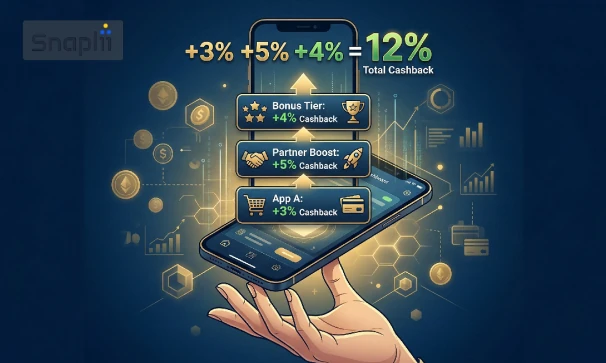
Yes, you can use multiple cash back apps at the same time. Most platforms operate independently, so combining them on the same purchase is not only possible but common among experienced savers. The real question is which combinations are worth the effort.
This guide covers three angles:
- Three stacking combinations that actually multiply your savings
- Three stacking mistakes that cost more time than they save
- A practical system for managing multiple apps without burnout
If you are looking for a layer that adds 5% to 12% instant cash back with minimal effort, the final section covers a gift card approach that fits into almost any stack.
Three Stacking Combinations That Actually Multiply Your Savings
Not all combinations are equal. These three have a clear mechanism for why the returns compound rather than overlap.
The Foundation Stack: Credit Card Base Layer Plus App Layer
Start with a credit card that earns rewards on everyday categories like groceries, dining, or gas. Then add a cash back app on top. Because the card and the app track rewards through separate systems, both trigger on the same transaction.
A card earning 1.5% to 2% combined with an app returning 2% to 10% on activated offers produces a total return of 3.5% to 12% on a single purchase. Neither platform sees the other, so there is no conflict.
The Double Capture Stack: Receipt Scanner Plus Card-Linked App
A receipt-scanning app rewards you for uploading proof of purchase. A card-linked app rewards you for the transaction itself. These two track completely different data: one reads the receipt image, the other reads the card transaction. Running both on the same shopping trip captures value from two independent channels.
The receipt scanner might return a flat point value or a small cash amount per item. The card-linked app adds its percentage on top. The total return exceeds what either app delivers alone.
The Triple Layer: Gift Card Pre-Purchase Plus Any of the Above
Before shopping, purchase a gift card for the retailer through a cash back platform. That earns an instant return at the point of card purchase. Then pay in-store using the gift card. If you bought the gift card with a rewards credit card, the card earns its own percentage on that purchase as well.
This creates three layers: credit card rewards on the gift card purchase, instant cash back from the gift card platform, and the full value of the gift card at checkout. All three systems are independent.
Three Stacking Mistakes That Cost More Time Than They Save
Stacking sounds like free money, but certain combinations produce diminishing returns or hidden friction.
Two Receipt Scanners on the Same Receipt
Some users upload the same receipt to multiple scanning apps. While technically possible, the second app rarely matches the same offers. Most of the return comes from the first scan. The incremental gain from the second is often pennies, and the time spent managing two scanning apps on every trip adds up fast.
Multiple Card-Linked Apps Covering the Same Merchants
If two card-linked platforms both partner with the same grocery chain, linking your card to both does not double the reward. Only one platform will process the transaction. The result is two apps to manage, two sets of offers to browse, and the same single payout. Redundancy disguised as strategy.
Too Many Apps to Actually Use
The most common stacking failure is ambition. Five apps installed, three forgotten within a month. Every unused app represents a sunk setup cost and zero return. Worse, the mental overhead of managing too many platforms leads to fatigue, which causes users to abandon even the apps that were working.
The tipping point for most people is two to three active apps. Beyond that, management cost outpaces incremental savings.
How to Run a Multi-App Stack Without It Becoming a Second Job
A stack only works if you actually maintain it. These three principles keep the effort sustainable.
The Two-Layer Rule: One Passive, One Active
Pick one app that runs in the background with zero input (card-linked or bank-based rewards) and one that requires a brief action per purchase (receipt scan, offer activation, or gift card pre-purchase). Two layers are enough to capture meaningful stacked returns. Adding a third is only justified if it takes under 10 seconds per transaction.
Weekly Batch Over Per-Trip Activation
Instead of checking apps before every store visit, set a weekly window. Spend five minutes each Sunday reviewing available offers, pre-purchasing gift cards for the week, and clearing any pending receipt uploads. Batching reduces the per-trip mental cost to near zero while keeping your stack active.
The Simplification Signal
If you notice an app sitting unused for two consecutive weeks, remove it from the stack. An app earning 3% that you use 100% of the time outperforms an app earning 8% that you forget to activate 70% of the time. Effective return equals the posted rate multiplied by your actual usage frequency. Simplify ruthlessly.
Where Gift Card Cash Back Fits in the Stack: Snaplii
In a stacking strategy, each layer should occupy a distinct role. Snaplii fills the "instant, high-return active layer" slot.
Headquartered in Canada and serving the North American market, Snaplii partners with 500+ brands and offers 5-12% instant cash back when you purchase gift cards through the app.
How It Works in Four Steps
First, browse 500+ brands inside the Snaplii app. Categories cover groceries, dining, convenience stores, and more. Second, select a gift card amount and pay with a debit card, credit card, WeChat Pay, or Alipay. Third, receive 5% to 12% Snaplii Cash instantly. Fourth, use the gift card in-store by showing the barcode, or online by entering the card number at checkout.
Why It Stacks Well
Snaplii's return is earned at the moment of gift card purchase, not at the point of sale. This means it operates on a completely separate transaction from your in-store payment. If you buy the gift card with a rewards credit card, the card earns its percentage on that purchase. Snaplii earns its 5-12% simultaneously. Two independent returns from one planned shopping trip.
There is no receipt to scan, no offer to activate, and no delayed settlement. This makes Snaplii a low-friction active layer that pairs naturally with any passive card-linked or bank-based reward system.
Snaplii Cash has no time restrictions and accumulates indefinitely for future gift card purchases.
Important note: Snaplii Cash can only be used for future gift card purchases through the platform and cannot be withdrawn to a bank account.
Frequently Asked Questions
What is Snaplii? Snaplii is a digital gift card and instant cashback platform headquartered in Canada. It partners with 500+ brands across North America and offers 5% to 12% instant cash back when you purchase gift cards through the app.
Can you use Snaplii alongside other cash back apps? Yes. Snaplii's cash back triggers on the gift card purchase, not the in-store transaction. This means it stacks with credit card rewards, card-linked apps, and receipt scanners without conflict.
How much can I save by stacking Snaplii with a credit card? A credit card earning 1.5% to 2% combined with Snaplii's 5% to 12% produces a total return of 6.5% to 14% on a single shopping trip. Actual rates vary by brand and promotion.
Can Snaplii Cash be withdrawn to a bank account? No. Snaplii Cash can only be used to purchase additional gift cards through the platform. It cannot be transferred to a bank account or converted to cash.
Are there any time restrictions on Snaplii Cash? No. Snaplii Cash has no time restrictions and accumulates in your account indefinitely until you choose to use it.
The Bottom Line on Using Multiple Cash Back Apps
You can use multiple cash back apps. The question is whether your specific combination compounds or just complicates.
The three stacks that work share one trait: each layer tracks a different data point, so the returns are additive, not overlapping. The three mistakes that fail share the opposite trait: redundant tracking, wasted effort, or abandoned apps.
Keep your stack to two layers, batch your management weekly, and cut any app you have not used in two weeks. If you want a high-return active layer that stacks cleanly with almost any passive setup, Snaplii offers 5-12% instant cash back across 500+ brands from its base in Canada.
Snaplii Cash is designed for future gift card purchases and cannot be withdrawn to a bank account. With that understood, the best stack is the one you will actually use every week.