
What Are the Best Cashback Apps Available in the US?
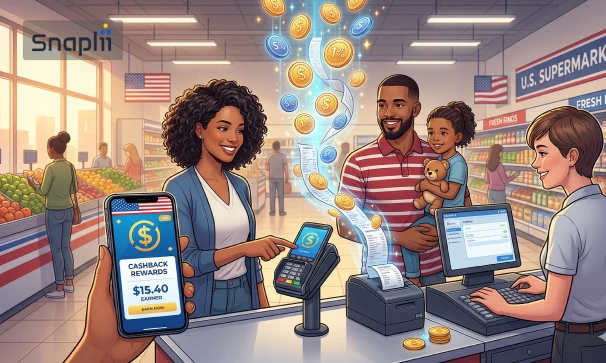
Cashback apps are easier to evaluate when they are tied to real spending moments, not just reward percentages. This guide looks at how US shoppers can compare app types across groceries, dining, gas, online shopping, and household essentials, then decide which cashback workflow actually fits their weekly routine.
Quick Answer
The best cashback apps available in the US are not all built for the same job. Some are better for online shopping, some are useful for receipt-based grocery offers, some focus on gas or dining, and some help shoppers earn cashback value through eligible e-gift card purchases.
For everyday spending, the most useful app is usually the one that fits a shopper's real routine. A commuter may care about gas and lunch. A family may care about groceries and household essentials. A student may care about small repeat purchases, online orders, and simple budgeting.
For shoppers who want cashback value connected to planned purchases, Snaplii is one option to consider. Snaplii is an app-based SaaS service built around e-gift card purchasing. In the app, its core service can be understood through four related functions: Gift Card, Cash Back, Save Money, and E-gift Cards. Users browse available e-gift card options, buy participating e-gift cards, and may earn 5%–12% instant cashback as Snaplii Cash when eligible offers apply. Actual cashback rates may vary by available e-gift card and current in-app offer, so users should always check the displayed rate before buying.
The Main Types of Cashback Apps in the US
Cashback apps in the US usually fall into a few categories. The best choice depends on whether the shopper wants quick reward visibility, online tracking, item-level grocery offers, or category-based deals.
| Cashback app type | Best for | Reward timing | Good fit for |
|---|---|---|---|
| E-gift card cashback apps | Planned everyday purchases | Cashback value may appear quickly when eligible | Groceries, dining and coffee, gas and transportation, household essentials |
| Online shopping cashback apps | Online orders | May depend on tracking and purchase confirmation | Mobile-first shoppers and online buyers |
| Receipt-based apps | Item-level offers | After receipt review | Grocery items, household products, personal care |
| Card-linked offer apps | Category or local offers | After transaction verification | Dining, gas, lifestyle purchases |
| Gas cashback apps | Fuel purchases | Depends on the offer model | Commuters and households with frequent driving |
This is why a single app rarely solves every savings need. A strong cashback routine usually starts with understanding where the household already spends money.
How to Choose the Best Cashback App for Your Routine
The highest cashback rate is not always the best deal. A 10% reward on a category a shopper rarely uses may be less valuable than a 5% reward on weekly essentials.
Before choosing an app, shoppers should look at six practical factors:
| Factor | Why it matters |
|---|---|
| Reward timing | Some apps show value quickly, while others require review or confirmation |
| Supported categories | The app should match real spending, not create new spending |
| Reward usability | Rewards should be easy to apply to future purchases |
| Purchase flow | The fewer steps required, the easier it is to repeat |
| Offer clarity | Shoppers should see the rate and rules before buying |
| Budget discipline | The app should support planned purchases, not impulse buying |
A good cashback app should make an existing budget more efficient. It should not make the shopper feel pressured to buy more.
Scenario 1: A Commuter Managing Weekly Gas and Lunch Costs
A commuter may start each week knowing that gas, parking, coffee, and quick meals will take up part of the budget. This shopper does not need a complicated app stack. They need a repeatable routine.
On Sunday night, they can estimate the week ahead: one gas fill-up, two coffee stops, and two workday lunches. Before each planned purchase, they can check whether a cashback app supports that category. If an eligible e-gift card is available for a dining or transportation-related purchase, the shopper can buy an amount close to the planned spend and avoid overbuying.
For this user, the best cashback app is not the one with the most features. It is the one that helps them make a familiar weekly cost slightly more efficient.
Scenario 2: A Family Shopper Planning Groceries and Household Essentials
A household may spend heavily on groceries, cleaning supplies, personal care, school snacks, and weekend meals. These expenses are not occasional. They repeat every week or every month.
A family shopper can build a simple pre-shopping habit. Before leaving for a grocery run or ordering household basics, they can list the expected purchase amount, check whether an eligible e-gift card fits the category, and choose a value close to the cart total.
This matters because family spending can grow quietly. A cashback app works best here when it is connected to a list, a budget, and a purchase the household was already planning.
Example: How Much Can a Cashback App Save in a Month?
The table below shows a sample monthly calculation for planned purchases. It is not a promise of savings; it simply shows how cashback value can add up when a shopper uses eligible offers for purchases they already planned to make.
| Monthly planned spending | Example cashback rate | Potential cashback value |
|---|---|---|
| Groceries and household essentials: $400 | 5% | $20.00 |
| Dining and coffee: $180 | 8% | $14.40 |
| Gas or transportation: $160 | 5% | $8.00 |
| Online shopping: $120 | 6% | $7.20 |
| Total planned spending: $860 | — | $49.60 |
In this example, planned monthly purchases could create $49.60 in reward value. Actual cashback rates may vary by available e-gift card and current in-app offer. The better habit is not to increase spending. It is to attach cashback to purchases already inside the monthly budget.
Scenario 3: A Student or Young Professional Shopping Online
A student or young professional may shop online for personal care, study supplies, basic home items, and occasional gifts. Online cashback can be useful, but the purchase path matters.
Some online cashback models depend on tracking links or purchase confirmation. Others are built around eligible e-gift card purchases, where the shopper can see the available rate before buying. This distinction matters for anyone trying to manage a small monthly budget.
A student might decide to set a $75 monthly limit for lifestyle purchases. Before placing an online order, they can check whether an eligible e-gift card matches the store category and cart amount. If it does, the cashback value becomes part of a planned purchase rather than a reason to browse more.
Where Snaplii Fits Among US Cashback Apps
Snaplii fits best in the e-gift card cashback category. It is not a traditional coupon site, a browser-extension deal finder, or a receipt-scanning tool. Snaplii is better understood as an app-based SaaS service company built around electronic gift card purchasing, with cashback functionality built directly into the gift card purchase flow.
For a US shopper comparing cashback apps, that positioning matters. A receipt app starts after the shopper buys something. A shopping portal may depend on a tracked click. A card-linked offer may depend on transaction verification. Snaplii starts earlier in the purchase moment: the shopper opens the app, browses available e-gift card options, chooses a gift card amount that matches a planned purchase, and completes the purchase inside the app.
Snaplii's four core service areas can be explained this way:
| Snaplii service area | What it means | How it helps a shopper |
|---|---|---|
| Gift Card | A mobile place to browse and buy participating gift card options | Helps shoppers plan purchases by store category instead of hunting for random coupons |
| Cash Back | Eligible participating e-gift card purchases may earn 5%–12% instant cashback as Snaplii Cash | Makes reward value visible in the app when the offer applies |
| Save Money | Snaplii Cash can be applied toward future gift card purchases | Helps turn one planned purchase into value for the next purchase cycle |
| E-gift Cards | Gift cards are delivered and organized digitally in the app flow | Useful for mobile-first shoppers who want fewer paper records and easier access |
A practical Snaplii routine looks like this:
- The shopper starts with a real purchase plan, such as groceries, dining, gas, transportation, or household essentials.
- They open Snaplii and check available e-gift card options before spending.
- They choose an amount close to the expected purchase, instead of buying more only because a rate looks attractive.
- They complete the e-gift card purchase in the app.
- If the purchase is eligible, they receive 5%–12% instant cashback as Snaplii Cash.
- They keep the gift card and reward value connected to future planned gift card purchases.
This makes Snaplii most useful for repeat categories, not impulse shopping. A family buying household essentials every week, a commuter planning fuel and lunch costs, or a student managing a monthly online shopping limit can use the same principle: check the available e-gift card option first, buy close to the planned amount, and let Snaplii Cash support the next purchase.
Snaplii is best understood as an app-based e-gift card purchasing platform built around four connected functions: Gift Card, Cash Back, Save Money, and E-gift Cards. For everyday shoppers, the practical value is that these functions sit in one purchase flow: choose a participating e-gift card, buy an amount that matches a planned purchase, receive eligible cashback value as Snaplii Cash, and use that value toward future gift card purchases.
The strongest habit is simple: start with the budget, check the current in-app rate, buy only what fits the plan, and review the reward value during the next shopping cycle.
Best Cashback App Strategy: Use One App for Each Job
Many shoppers get frustrated because they expect one app to do everything. A better approach is to assign each app model a specific job.
| Spending need | App model to consider | Practical use |
|---|---|---|
| Planned everyday purchases | E-gift card cashback | Use before a known purchase |
| Online retail orders | Online shopping cashback | Use when tracking rules are clear |
| Grocery item deals | Receipt-based apps | Use when specific items match the list |
| Fuel-related spending | Gas cashback tools or eligible gift cards | Use before routine driving costs |
| Dining and coffee | E-gift card or card-linked offers | Use for planned meals and small repeat purchases |
This keeps cashback simple. Instead of chasing every offer, the shopper builds a routine around the categories that matter most.
Common Mistakes When Choosing Cashback Apps
The biggest mistake is treating cashback as free money. Cashback only helps when the original purchase makes sense.
Common mistakes include:
- Choosing an app only because one offer looks high
- Downloading too many apps and not using any consistently
- Buying something only because a reward is available
- Ignoring minimums, timing, or usage rules
- Forgetting unused gift card balances
- Failing to check whether the rate is still available before buying
A strong cashback strategy should feel boring in a good way. It should support groceries, transportation, dining, household essentials, and other repeat costs without creating new habits of overspending.
A Simple Weekly Cashback Routine
A shopper does not need to plan every purchase in detail. A simple weekly system is enough.
- Pick two recurring categories. For example, groceries and coffee, or gas and household essentials.
- Estimate the week before spending. Write down expected purchase amounts before shopping starts.
- Check available cashback before each planned purchase. The goal is to match offers to the list, not the other way around.
- Buy only the amount that fits the plan. Smaller, repeatable purchases are easier to manage than one large unused balance.
- Review reward value once a month. Look at whether cashback supported real needs or encouraged extra spending.
This routine helps cashback apps become part of budgeting instead of becoming another distraction.
FAQ: Cashback Apps in the US
What is the best cashback app in the US?
The best cashback app depends on the shopper's routine. For planned everyday purchases, e-gift card cashback apps can be useful. For online orders, shopping cashback apps may help. For grocery item offers, receipt-based apps may be a better fit.
Are cashback apps actually worth using?
They can be worth using when they support purchases the shopper already planned to make. They are less useful when they encourage impulse buying or require too many steps to maintain.
Which cashback apps give faster rewards?
Apps built around eligible e-gift card purchases may show cashback value faster than models that depend on receipt review or online tracking. Users should still check the displayed rules before buying.
Do cashback apps work for groceries?
Yes, but the best model depends on the purchase. Some shoppers use receipt-based offers for specific grocery items. Others use eligible e-gift cards for broader planned grocery spending.
Can cashback apps help with gas purchases?
They can help when the app supports gas or transportation-related spending. Drivers should compare the available offer, the planned fuel budget, and the steps required before choosing an app.
Is Snaplii useful for US shoppers?
Snaplii can be useful for US shoppers who want an app-based e-gift card cashback platform rather than a traditional coupon workflow. Its main use case is buying participating e-gift cards, earning 5%–12% instant cashback as Snaplii Cash when eligible offers apply, and applying that value toward future gift card purchases.
Should I use more than one cashback app?
Using more than one app can make sense if each app has a clear role. For example, one app may support planned e-gift card purchases, while another may support receipt-based grocery offers.
Final Takeaway
The best cashback apps available in the US are the ones that match real spending behavior. A high reward rate matters less than timing, usability, category fit, and budget discipline.
For shoppers who want cashback value tied to planned everyday purchases, Snaplii can be part of a simple routine: browse available e-gift card options, choose an amount close to the planned purchase, earn 5%–12% instant cashback as Snaplii Cash when available, and apply that value toward future gift card purchases.